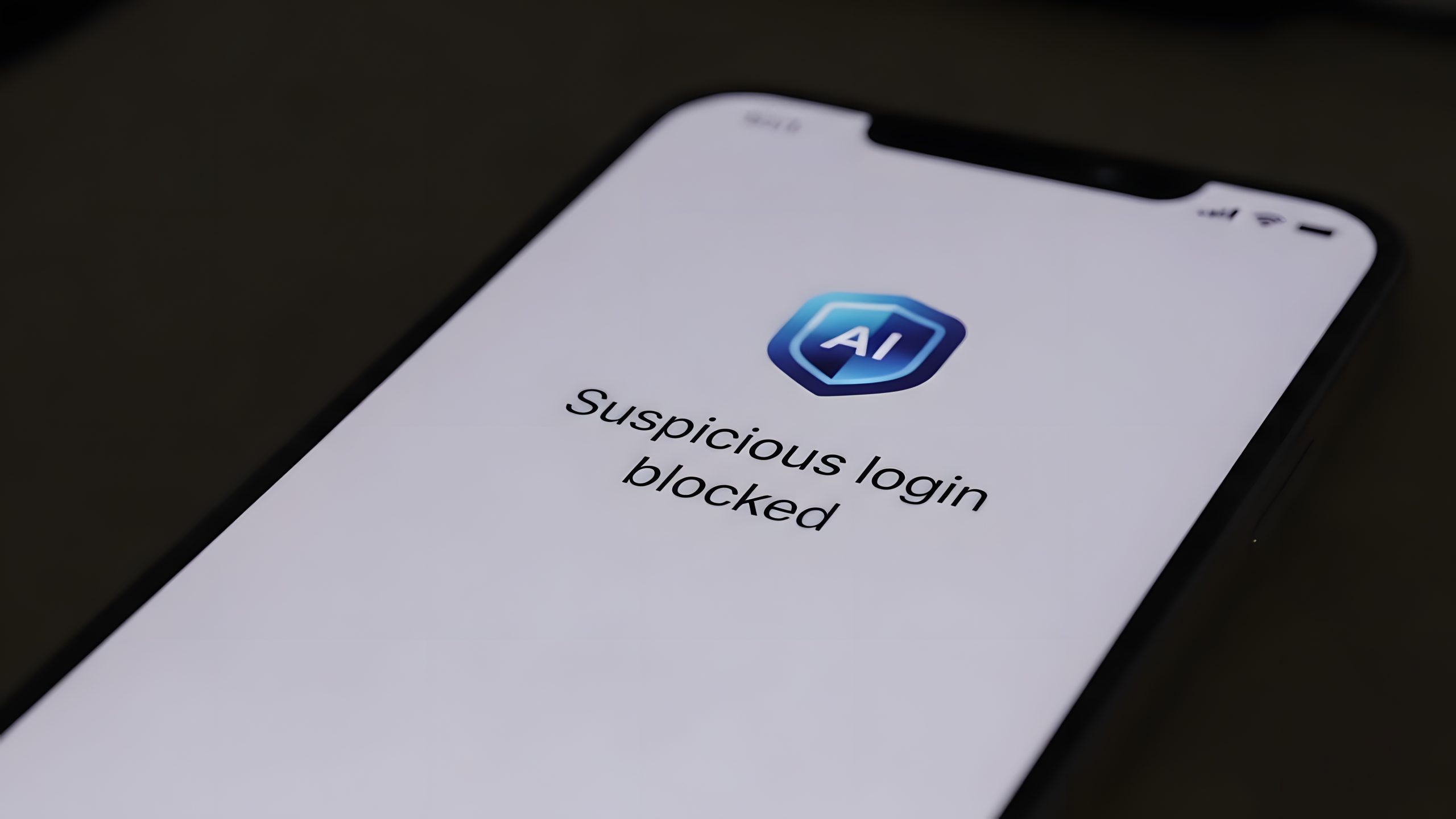

You install a fancy alarm system in your house thinking that you can conquer every threat that comes in your way. One day, an alarm goes off… but no one knows what to do.
The system works exactly as intended. This is not the failure of the system, this is the failure of the preparedness.
In enterprises, AI is playing the same role. AI is now embedded across security operations. It monitors network behavior, detects anomalies in real time, prioritizes alerts, and, in some cases, initiates automated responses.
Simultaneously, AI is shaping both sides of the equation. The same capabilities that strengthen defense are also being used to create faster, more adaptive attacks, narrowing the margin for response.
When something goes wrong, preparedness is not defined by how quickly a threat is identified, but by how effectively it is handled.
The AI paradox: Stronger defense, smarter attacks
AI is not in an early stage in today’s enterprises and their cybersecurity systems. It is mainstream now. Already, 73% of organizations have integrated AI into their cybersecurity systems.
This sounds reassuring, except that at the same time, 65% of IT leaders say their current cybersecurity defenses cannot handle AI-powered attacks.
This highlights a deeper contradiction. Enterprises are continuing to integrate AI into their system to position them as future-ready, but how are they actually using it?
If 65% of IT leaders say their current cybersecurity defenses cannot handle AI-driven attacks, are organizations truly preparing for what lies ahead, or simply adopting AI without assessing its real impact?
What enterprises mistake for AI-ready cybersecurity preparedness?
AI has quickly become the default layer in the modern cybersecurity systems. Nevertheless, AI-readiness is the system is not defined by how well the systems are understood and managed.
For many organizations, preparedness begins and ends with deployment.
AI systems are trained on the data, influenced by patterns, and largely dependent on the configurations that can be easily manipulated.
Let us assume a scenario:
An AI system flags an anomaly in network behavior. The alert is prioritized based on pattern recognition, and the system assigns it a risk score. On the surface, everything is functioning as expected.
But what happens next depends on the context.
-
If the model has been trained on incomplete or biassed data, the alert may not reflect the actual severity of the threat.
-
If configurations are misaligned, the system may either over-prioritize noise or underplay critical signals.
-
If teams rely entirely on the system’s output without validation, response decisions may be delayed or misdirected.
The system identifies the signal. But the interpretation, validation, and response still depend on human understanding and operational clarity.
This is not a hypothetical situation.
In 2026, the Mythos AI system demonstrated what the future of cybersecurity could look like. The model was capable of identifying hundreds of critical vulnerabilities across complex systems in a fraction of the time traditional methods would take.
On the surface, this represents the ideal state of preparedness. Faster detection, broader visibility, and more intelligent systems.
Despite these restrictions, Bloomberg reported that a small group of unauthorized users accessed the model through a third-party vendor environment on the same day Anthropic announced its limited release.
A tool built to strengthen defense had simultaneously become a point of vulnerability. This is where assumptions about preparedness begin to break. The verdict was not that the AI failed, but that the organizational layer around it was not ready.
Toward a definition of cybersecurity preparedness that can withstand the age of AI
Cybersecurity preparedness in the age of AI is not only about the presence of the intelligence system.
As attack timelines compress, with breakout times now measured in minutes rather than days, the advantage does not lie in detecting more signals, but in reducing the time between detection and decisive action.
CrowdStrike’s 2026 Global Threat Report highlights this clearly. The average breakout time, the span between an attacker’s initial access and lateral movement through a network, dropped to just 29 minutes in 2025, a decline of 65% from the previous year.
Simultaneously, more than 50% of known vulnerabilities no longer require authentication, lowering the barrier for exploitation.
This creates an environment where threats do not need to be sophisticated to be effective. They only need to move faster than the organization’s ability to respond.
Real preparedness for a cybersecurity attack in the age of AI is not measured by the sophistication of tools. It is measured by what happens in the 29 minutes after the alarm goes off.
But are response processes tested, not just documented? Is the gap between detection and action measured in seconds or in escalation chains?
Those are the questions that separate organizations that are genuinely resilient from those that are merely well-equipped.
Alarms will go off again… is your organization prepared?
When people talk about the biggest gap in the enterprise security systems, they immediately point to misconfigured AI model or an unpatched system. But, it is no longer the technical deficiencies.
The most dangerous vulnerability in 2026 is not sitting in your tech stack. It is sitting in your org chart.
Attackers have already automated their side of the equation, AI is merely compressing the time between their intent and their execution. Now, the remaining variable is how swiftly the IT team can think, react and determine what actions to take.
Let us be honest, right now that variable is losing. This is the skill gap that no AI tool can close.
The WEF Global Cybersecurity Outlook 2026 found that 66% of organizations report significant cybersecurity talent shortages. And 56% of the survey respondents cited that the cybersecurity skills shortage is their top challenge to improving resilience.
The consequences are measurable: 88% of organizations experienced at least one significant security event in the past year that respondents tied directly to a skills shortage.
These are not pipeline problems waiting to be solved by better hiring. They are operational failures happening right now, inside organizations that have already invested heavily in the right tools.
No platform fixes this. No AI layer closes a skills gap.
Genuinely resilient organizations treat their security posture as a hypothesis to be tested, here is how:
-
Stop running drills that your team could pass in their sleep. Make it uncomfortable. Make it real.
-
An alert that nobody acts on is just a notification. Start measuring the gap between “we saw it” and “we stopped it.”
-
Detection without response is just expensive logging. Keep closing the loop until the process becomes second nature.
-
Your AI is only as smart as the data you fed it. Audit it like you would audit anything else that holds the keys to your kingdom.
-
What about those third-party vendors with access to your systems? They are your problem too. Treat them like it.
The 29-minute breakout window is not a technology problem. It is an organizational readiness problem.
Closing that window requires not just faster tools but faster humans, clearer response chains, and the institutional muscle memory that only comes from repeated, realistic testing.
The alarm will go off again. The only question worth asking is whether your organization has rehearsed what happens next, before the clock starts.