
Let me paint you a picture.
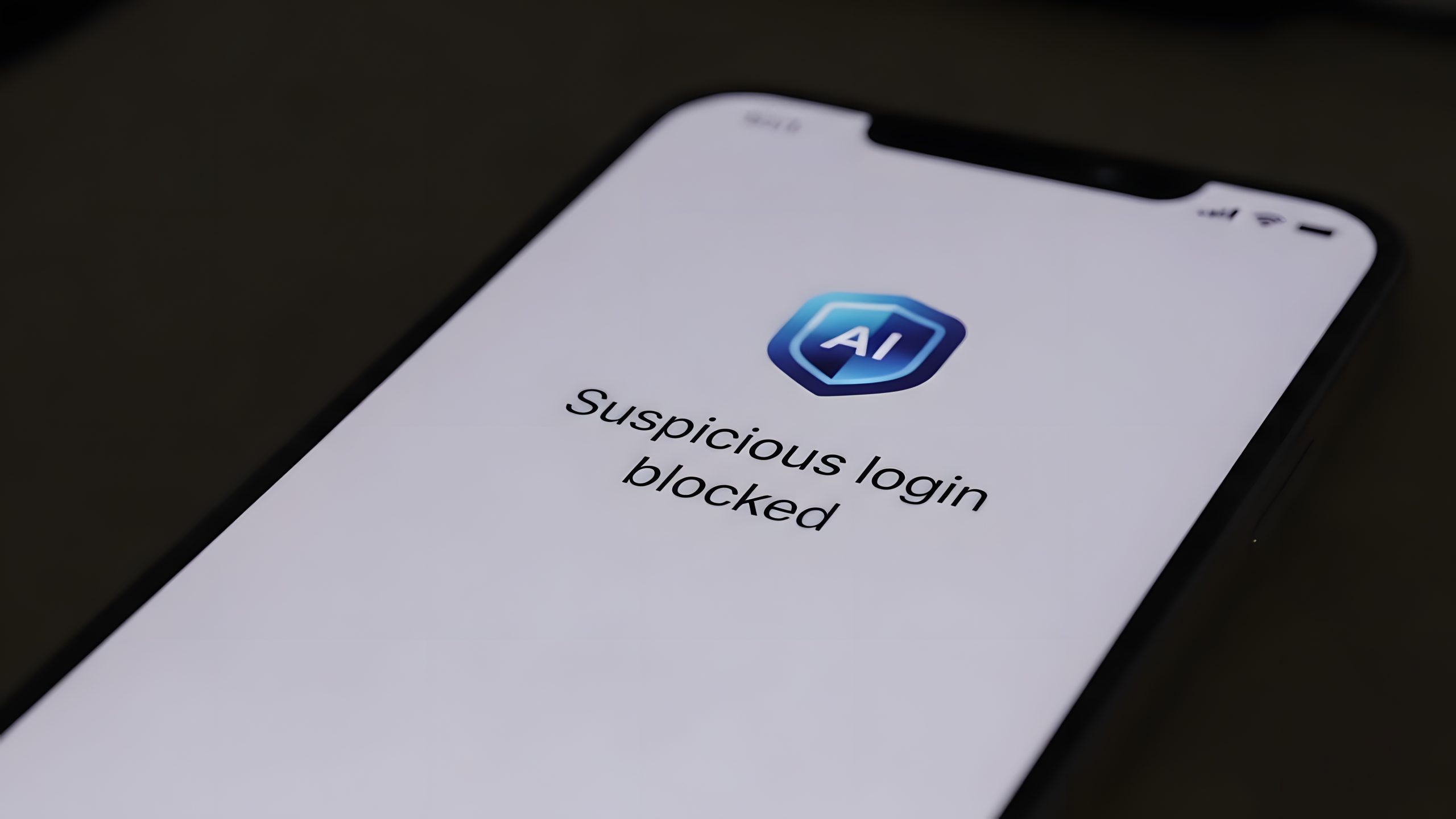
It’s 2:47am. Somewhere in a dimly lit room that smells faintly of cold coffee and existential dread, a security operations center (SOC) analyst is staring at alert number 847 of the night. The alert says: “Suspicious login from unusual location.”
The analyst, bleary-eyed and running on willpower and an energy drink, clicks into it.
Username: j.smith@corp.com
Location: Chicago
But wait! John Smith was in London this morning. Or was it yesterday morning? The analyst squints. Checks another tool. Opens a ticket. Escalates. By the time anyone looks at it, John Smith has already had his credentials used to exfiltrate six months of financial records.
This is much more likely than the worst-case scenario that you imagined.
The modern SOC is, in many ways, a monument to human suffering dressed up in dashboard form. Thousands of alerts. Dozens of tools. Four analysts. And somewhere out there, an attacker who only needs to be right once.
The math has been broken for years
Let’s talk numbers.
The average large enterprise SOC processes over 3,000 alerts per day from more than 30 different security tools. A 2025 industry survey found analysts collectively handle around 960 alerts daily, and that’s the average.
Then there’s the speed problem. In 2025, the average breakout time (the time between an attacker’s initial access and full lateral movement through a network) compressed to just 4 minutes in the fastest observed incidents. The average SOC analyst—working through a queue of hundreds of alerts—simply cannot triage, investigate, and respond in 4 minutes. Not unless they’ve discovered some way to violate the laws of physics that the rest of us haven’t been told about.
And underneath all of this sits a workforce crisis so severe it would be funny if it weren’t catastrophic. The global cybersecurity skills shortage is approaching 4.8 million unfilled positions worldwide. Hiring your way out of this problem isn’t just expensive, it’s impossible.
So yeah, the math has been broken for years. Agentic AI is the first technology that changes it.
So what is an agentic SOC, actually?
An agentic AI system isn’t simply a chatbot you ask questions. It’s an AI that pursues goals autonomously, executing multi-step tasks, reasoning through incomplete information, and acting across tools without waiting to be told.
In security operations, that means an agent receives an alert, and without prompting correlates it against threat intelligence, checks endpoint telemetry, reviews identity logs, assesses severity, executes initial containment, and produces an investigation report. All in seconds. Around the clock. Without getting demoralized.
The global AI-driven cybersecurity market was valued at approximately USD 25.35 billion in 2024 and is expected to expand to USD 93.75 billion by 2030, registering a CAGR of 24.4% between 2025 and 2030.
It’s clear that the market—unlike the analysts it’s meant to assist—is not fatigued.
The proof isn’t theoretical. It’s already sitting in production logs
Muhammad Ali Paracha, Transurban’s head of cyber defense, didn’t set out to build an AI system. He set out to fix something that had quietly broken. Alert volumes had grown so large that analysts were triaging just 8% of tickets. The other 92%? Invisible. And at month-end, when senior analysts reviewed closed cases in Excel, they kept finding errors in tickets that couldn’t be reopened. The damage was already done.
Hiring more analysts wasn’t the answer. It was too expensive, too hard to find, and too slow to scale.
So his team built two AI agents: one to check that incoming tickets were categorized correctly, another to verify resolution notes before cases closed. Neither agent made final calls. They flagged issues and handed findings back to the human analyst. Simple quality control. But the effect was significant: analysts were finally making decisions based on accurate, complete information instead of memory and guesswork. The next phase is automating the entire triage and response process. What started as a paperwork fix is becoming a full operational model.
That pattern of agents doing the heavy lifting so humans can do the thinking is showing up everywhere.
This is the shift that matters. From analyst-as-triage-machine to analyst-as-strategic-thinker. It’s better for security. It’s better for analysts. It’s better for organizations. It’s almost suspicious how obviously correct it is.
The objections (And why most of them are wrong)
Objection 1: “AI will replace all our analysts and destroy jobs”
It won’t, and this framing misunderstands what agentic AI is good at. Agentic AI excels at speed, scale, and pattern recognition across enormous datasets. It is genuinely bad at judgment calls with organizational, legal, or reputational implications. Every production agentic SOC deployment in 2025 operates on a human-in-the-loop model for consequential decisions. The agent handles coverage and speed. The analyst handles accountability and judgment. Organizations that try to cut humans out entirely will not save money, they’ll expose themselves to risks the technology was never designed to absorb.
The more honest concern is: what happens to analysts’ skills? Gartner has warned that by 2030, 75% of SOC teams could experience erosion in foundational security analysis skills due to overdependence on automation. This is real. The answer isn’t to avoid agentic AI. It’s to design for skill retention deliberately. Use agents to handle the tedious; keep humans engaged in the interesting.
Objection 2: “We don’t trust AI making autonomous decisions about our infrastructure”
This is a sensible objection dressed up as a philosophical one. The answer is governance, not avoidance. Define clearly what agents can do autonomously (enrich, triage, investigate, recommend), what requires human authorization (isolate a server, block a user, execute a remediation), and what requires senior review (anything with legal or business consequences). The boundaries aren’t hard to draw. They just require someone to actually draw them.
Objection 3: “The threat landscape is too dynamic for AI to keep up”
Respectfully: the threat landscape is too dynamic for humans to keep up. AI-driven phishing attacks increased by 1,265% in 2025. Ransomware incidents grew by 45%. Attackers are already using AI at scale. The question is not whether to deploy AI in the SOC. The question is whether you’d like your AI or theirs to win.
What does the agentic SOC actually look like in 2026
We’re past the hype cycle. This is real, it’s deployed, and it’s delivering results. But adoption is still early. The Gartner Hype Cycle for Security Operations places AI SOC agents at the Innovation Trigger stage, with market penetration at just 1-5%. That means most organizations are either ignoring this entirely or doing preliminary evaluations. Neither of those positions will be comfortable in a few months.
Organizations that start building agentic SOC capabilities today will have a real security advantage over their competitors. Not a small one either. A big one. The speed gap grows. The cost savings grow. Junior analysts become more effective. It all adds up.
Attackers have already made their call. They are using AI to move faster and hit harder.
So here is the question every CISO needs to answer: are you going to keep sending your analysts into battle with a queue of 3,000 alerts and a cup of stale coffee? Or are you going to give them a machine that never sleeps?
The choice seems obvious.