
For decades, the march of computing progress was measured by Moore’s Law—the prediction that the number of transistors on a chip will double every year. We saw transistors shrinking, chips accelerating, and power multiplying. But today, that pace is slowing. Progress hit physical limits: silicon can only get so small, data centers can only get so energy-hungry, and AI models can only expand so far before the costs—environmental, economic, and human—become unsustainable.
So where should the tech industry look for inspiration? Increasingly, the answer lies not in more brute force but in nature’s playbook. After all, living systems have had billions of years to solve problems of efficiency, adaptability, resilience, and storage—the same problems vexing technologists today.
From the way human brains function to the way ants coordinate without a leader, nature offers blueprints that could redefine the very architecture of computing. Below, we explore five awe-inspiring lessons from nature and how they’re shaping tomorrow’s technology.
1. The brain and the power of minimalist efficiency
The human brain is a paradox: an organ that weighs around 1.4 kilograms, requires about the same energy as a 20-watt light bulb, and yet performs tasks that rival the world’s largest supercomputers. By comparison, the Frontier supercomputer at Oak Ridge National Lab consumes 20 megawatts. That’s literally a million times more power!
How does the brain do it? It relies on parallel processing, sparse activation, and event-driven signaling, which means neurons only fire when needed, unlike the relentless on/off cycle of silicon transistors.
This lesson has sparked an entire field of neuromorphic computing. Chips like IBM’s TrueNorth and Intel’s Loihi mimic neural pathways, firing only when triggered and dramatically reducing energy use. Today, instead of designing ever faster processors, researchers are now asking: How do we make machines as lean, adaptive, and efficient as our own biology?
Nature’s wisdom: The future of computing isn’t about raw power. It’s about smart, energy-efficient adaptability.
2. DNA as the ultimate hard drive of the future
Imagine storing the entire internet in a shoebox. That’s the promise of DNA data storage. Just one gram of DNA can theoretically encode about 215 petabytes of data—an almost unimaginable density, far beyond what any silicon drive can achieve.
Unlike hard drives that decay within decades, DNA remains readable for thousands of years under the right conditions. Researchers have already encoded Shakespeare’s sonnets, a movie, and even an operating system into DNA strands. Companies like Microsoft, in partnership with the University of Washington, are building automated DNA storage systems that could eventually replace warehouses full of magnetic tapes with labs housing tiny vials.
The challenge today is speed and cost: writing and reading DNA is still a slow and expensive process. But new techniques, such as encoding via methylation patterns, are making the process 10,000x faster and cheaper than early experiments.
Nature’s wisdom: Storage doesn’t need to be bulky. It can be dense, durable, and organic. In the future, our server farms may resemble biotech labs more than concrete data centers.
3. Ants, bees, and the rise of swarm intelligence
No single ant knows the colony’s grand plan, yet together they solve problems that baffle centralized systems: finding the shortest paths to food, adapting to disruptions, and maintaining order in chaos. This phenomenon, known as swarm intelligence, is a powerful model for distributed computing.
Computer scientists have translated this into ant colony optimization (ACO) algorithms, which mimic ant foraging behavior. ACO algorithms are now deployed in telecommunications, logistics, and robotics, where they outperform traditional top-down approaches. For example, a recent study applied ACO to logistics routing and achieved 99.9% accuracy in adaptive scheduling, reducing costs and improving resilience.
Blockchain, too, borrows from swarm logic. Consensus emerges not from a central authority but from many nodes validating each other, much like bees agreeing on the best hive site.
Nature’s wisdom: The most scalable, resilient systems aren’t controlled from the top. They emerge from bottom-up collaboration.
4. Resilience through biological redundancy
Biological systems are messy, but they’re resilient. Cells die constantly, yet organisms live on. DNA carries error-correcting codes, proteins misfold and are recycled, and ecosystems rebound after shocks. Failure isn’t avoided—it’s absorbed, adapted to, and often turned into innovation.
Technology is learning to follow suit. Cloud infrastructures now embed redundancy and self-healing mechanisms, allowing services to reroute traffic instantly during outages. Self-healing networks monitor themselves and patch vulnerabilities without human intervention, echoing the way the immune system detects and neutralizes threats.
As we move deeper into edge computing and autonomous systems, this resilience becomes critical. Instead of striving for flawless machines, engineers are designing ones that bend but don’t break.
Nature’s wisdom: Survival is not about perfection. It’s about the capacity to recover, adapt, and evolve.
5. Photosynthesis and the dawn of light-powered computing
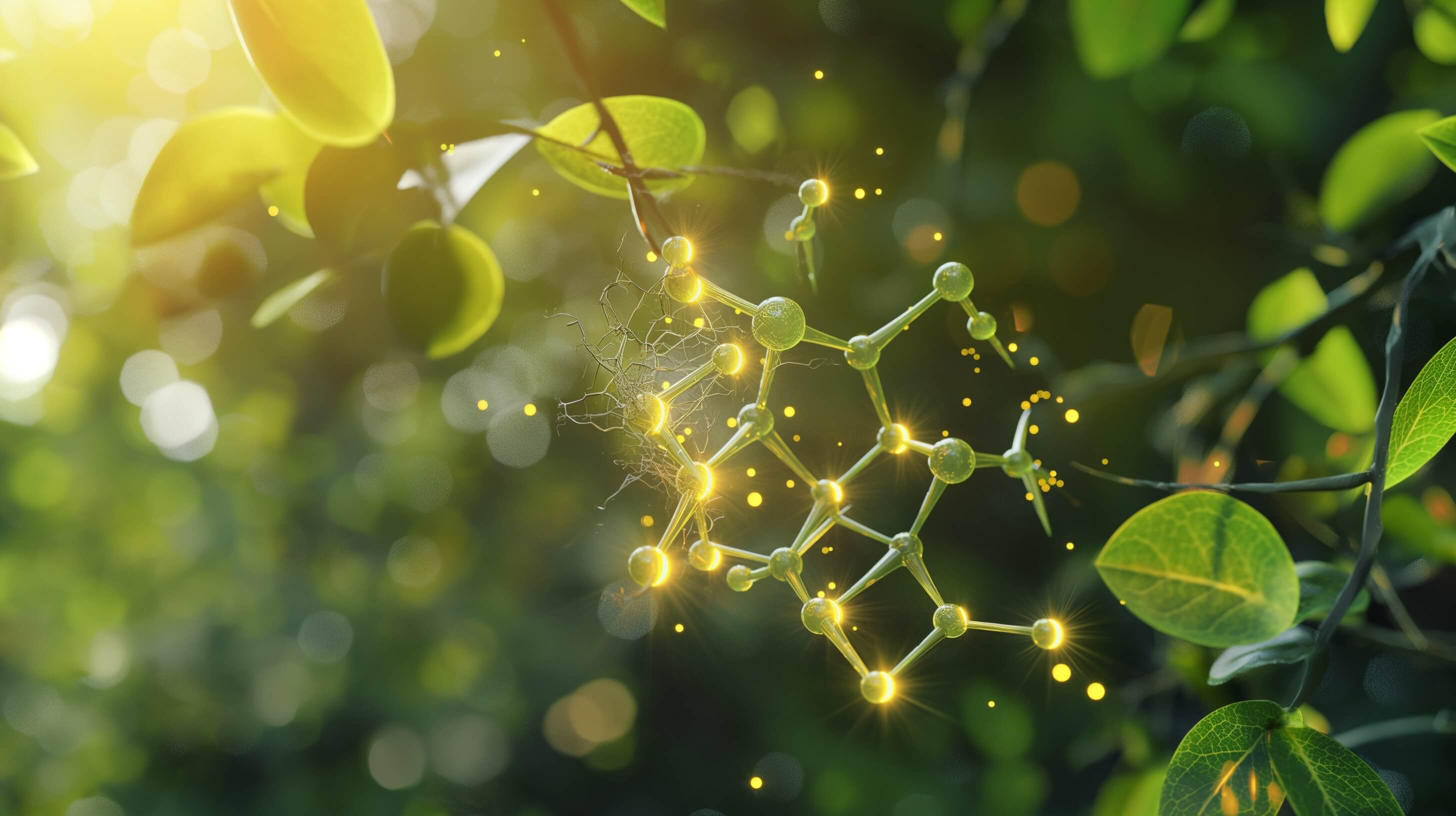
Leaves perform a miracle every day: they capture photons and transform them into chemical energy with near-perfect efficiency. A 2025 study from the Technical University of Munich reveals that photosynthesis uses an ultrafast, short-lived Qx energy state in chlorophyll, supported by quantum coherence and vibronic coupling, to channel energy almost losslessly to the reaction center.
This phenomenon has inspired the field of photonic computing, which replaces electrons with photons. Light moves faster than electricity and generates almost no heat, promising orders-of-magnitude improvements in speed and efficiency. Cambridge Consultants projects photonic processors could offer 10–50x bandwidth and significantly lower energy use.
Recent breakthroughs include MIT’s photonic processors for machine learning and Lightmatter’s 2025 chip that promises to slash AI’s massive energy footprint.
Nature’s wisdom: Energy is not just about generation. It’s about seamless, lossless transfer. The next computing revolution may literally be powered by light, just like the leaves outside your window.
Parting thoughts
Rather than simply chasing faster chips or larger data centers, the future of computing may lie in principles that nature has already mastered: efficiency, density, collaboration, resilience, and energy elegance. Brains, DNA, ants, living cells, and even leaves are not just biological wonders. They are living prototypes of tomorrow’s technologies, waiting for us to decode and reimagine in silicon, light, and beyond.
Nature has been running the ultimate R&D lab for nearly four billion years. If we learn to listen, its designs could guide us toward computing that is not only faster and smarter, but also sustainable, adaptive, and profoundly human-centered. The next great leap in technology may not be about outpacing nature, but about finally learning to collaborate with it.